
The Tool Desk
Outbyte Driver Updater FREEFix the driver behind crashes, sound loss and screen glitchesFind Drivers →Outbyte PC Repair FREERepair Windows errors before they cause bigger problemsFix Now →YouTube monetization policies for AI-generated content do not impose a blanket ban on AI videos. As of August 18, 2026, AI-assisted and AI-generated videos can earn money when they provide original viewer value, meet YPP and copyright requirements, disclose realistic synthetic content, and remain advertiser-friendly. Mass-produced, repetitive, misleading, or rights-infringing channels face the greatest risk.
The practical question is not whether artificial intelligence was used. YouTube evaluates whether the creator added meaningful originality, whether viewers could be misled, whether every asset can legally be used commercially, and whether the channel’s overall production looks authentic rather than automated at scale.
Key takeaways
- YouTube’s current monetization policy does not automatically reject AI-generated videos, but mass-produced or repetitive template content may be classified as inauthentic content.
- Realistic synthetic or meaningfully altered depictions of people, places, events, statements, voices, or music generally require disclosure during upload.
- YouTube says disclosure alone does not reduce a video’s audience or make the video ineligible for monetization, but failing to disclose consistently can lead to enforcement or YPP penalties.
- AI narration, captions, stock footage, music, or visual effects do not automatically transform scraped or reused material into original content.
- The expanded YPP entry point is 500 subscribers plus activity and watch-time or Shorts-view requirements, while ad-revenue sharing generally requires 1,000 subscribers plus the higher watch-time or Shorts-view threshold.
- Copyright, commercial-use licensing, Community Guidelines, advertiser suitability, privacy, impersonation, and fake-engagement rules remain separate tests from AI disclosure.
What are YouTube monetization policies for AI-generated content?
YouTube monetization policies for AI-generated content allow monetization when AI is part of a channel that satisfies YouTube Partner Program requirements and produces original, authentic, rights-cleared, advertiser-suitable content. YouTube’s current policy focuses on the value and character of the finished channel rather than applying a universal human-made-versus-AI-made rule.
YouTube renamed its former “repetitious content” policy to “inauthentic content” on July 15, 2025. YouTube describes the rename as a clarification that repetitive and mass-produced content is covered by the existing principle that monetized content should be original and authentic. See YouTube’s current channel monetization policy.
What’s actually slowing this PC down?
Pick the symptom - the matching free tool is one click away.
#1 Best Overall
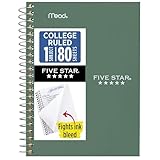
- This 4-3/8" x 7" small size, 1 subject notebook has 80 double-sided college ruled sheets that fight ink bleed and are perforated for easy tear out. Perfectly sized for when you're on the go.
- Tough pockets resist tears and hold loose sheets and notes. Durable plastic water-resistant front cover helps protect your notes and our Spiral Lock wire helps prevent snags on clothes and backpacks.
- All the benefits of our larger notebooks in a smaller, easy to carry size. Sheets measure 4-3/8" x 7 when torn out.
- Available in Seaglass Green
- LASTS ALL YEAR. GUARANTEED!*
A useful working test is:
Does the creator add clear, original, substantive value, or does the channel look like automated content production at scale?
A fully AI-generated video is not automatically forbidden. A fully automated channel is nevertheless exposed to high risk when its videos are generic, interchangeable, assembled from a repeated template, or made primarily to capture search traffic. A video may be technically “original” because a creator generated it, yet still fail review if the finished result offers little meaningful education, entertainment, analysis, storytelling, reporting, or commentary.
What five tests does an AI video need to pass?
An AI video must pass several independent tests. Passing one test does not guarantee that the video passes the others.
| Test | Core question | Typical AI-channel failure |
|---|---|---|
| Originality | Did the creator add meaningful value? | Scraped text read by an AI voice |
| Authenticity | Does the channel avoid repetitive, mass-produced output? | Dozens of interchangeable videos using one template |
| Disclosure | Could viewers mistake synthetic material for reality? | A fake public-figure statement or realistic fabricated event |
| Rights | Can every visual, sound, voice, likeness, and other asset be used commercially? | Unlicensed music, footage, voice, image, or cloned likeness |
| Advertiser suitability | Can advertisers reasonably appear beside this specific video? | Graphic, shocking, deceptive, dangerous, or sensitive material |
YouTube can review the video and its surrounding package, including the title, thumbnail, description, tags, and channel context. Community Guidelines, copyright, AdSense, Terms of Service, paid-promotion, privacy, impersonation, fake-engagement, and invalid-traffic rules can also affect monetization.
Can fully AI-generated videos be monetized?
Fully AI-generated videos can potentially be monetized, but fully automated production creates the greatest inauthentic-content risk. YouTube specifically identifies generic or unoriginal AI-generated content using templates that give the impression of mass production as an example of content that may not monetize.
The important distinction is between AI generation and low-value automation. A creator who uses AI to produce an original animated story, then supplies distinctive writing, direction, editing, sound design, and a meaningful audience experience, presents a different review profile from a channel that automatically publishes hundreds of near-identical videos.
Lower-risk patterns
- A human-written or substantially human-edited educational script supported by original demonstrations, screen recordings, experiments, or analysis.
- AI-assisted animation built around original characters, storytelling, and deliberate visual direction.
- Original commentary over licensed or self-created visuals.
- A creator’s own voice cloned for multilingual dubbing, with the necessary tool and voice rights.
- Clearly fantastical fiction that is not presented as real.
High-risk patterns
- Hundreds of videos that differ only by a keyword, celebrity, location, character, or image set.
- AI voiceovers reading articles, scraped websites, Wikipedia-like summaries, or news reports with little original analysis.
- Image slideshows or scrolling text with minimal commentary.
- Automated “top 10” videos with the same script structure, pacing, visuals, and conclusion.
- Bulk-uploaded AI music or short clips with little creative distinction.
- Content produced mainly to target search terms instead of serving a specific viewer need.
YouTube does not publish a universal percentage of human input, number of edits, word count, or number of original seconds that guarantees approval. The relevant evidence is the substance of the finished work and the channel’s pattern over time.
What does YouTube mean by inauthentic content?
Inauthentic content is repetitive or mass-produced material that does not demonstrate enough original value for monetization. YouTube’s policy applies at the channel level, so a strong upload does not necessarily repair a channel dominated by weak, interchangeable videos.
Reviewers may examine the main theme, newest videos, most-viewed videos, largest share of watch time, titles, thumbnails, descriptions, About section, and other channel material as needed. A channel may attract scrutiny when its videos repeatedly use:
- the same script with only names, topics, or images changed;
- the same AI narrator and visual sequence for every upload;
- automatically generated celebrity, health, finance, history, or news summaries;
- identical openings, outcomes, conclusions, and calls to action;
- high-volume publishing that makes each video feel interchangeable; or
- little evidence of research, interpretation, editing judgment, or creator perspective.
Similar formats are not automatically disallowed. A channel can use a consistent presenter, intro, or visual identity when the substance changes materially and each episode gives viewers a distinct creative, educational, analytical, or entertainment experience. Consistency is branding; repetition without meaningful substance is the risk.
Does AI-assisted content require disclosure?
AI assistance that does not create a realistic impression about people, places, events, or statements generally does not require the altered-content disclosure. YouTube lists brainstorming, outlines and scripts, thumbnails, titles, infographics, captions, color correction, lighting adjustments, background blur, aesthetic filters, upscaling, sharpening, repair, audio repair, a creator’s own cloned voice, clearly unrealistic imagery, gameplay footage, and non-misleading production assistance as examples that generally do not require disclosure.
Rank #2

- A classroom classic: this 6-pack of 1-subject spiral notebooks helps you identify your subjects at a glance with color-coding efficiency; color assortment may vary
- The right ruling: these 8" x 10-1/2", college-ruled notebooks fit more writing per page than wide-ruled sheets; each notebook provides 70 double-sided sheets with red margin lines
- Perect perforation: Dependable micro-perforated sheets retain your must-have notes but still detach cleanly when you’re ready to revise
- Glide from page to page: Your favorite gel or ballpoint pens will move effortlessly across these smooth pages for A+ notes with minimal ink bleeding or show-through
- 3-Hold punched: Every notebook comes 3-hole punched to fit a standard binder; take along one notebook or several to save extra trips to the locker
“No disclosure required” does not mean “automatically monetizable.” Copyright, rights clearance, originality, advertiser suitability, privacy, impersonation, and inauthentic-content policies still apply.
Do these 3 things before closing this tab:
1Scan for outdated or missing drivers - takes under a minute2Repair Windows errors before they cause bigger problems3Fix the driver behind crashes, sound loss and screen glitches| AI use | Disclosure tendency | Separate monetization concern |
|---|---|---|
| Brainstorming, outlining, captions, or cleanup | Generally no disclosure | Finished video still needs original value |
| Clearly fantastical animation | Generally no disclosure if obviously fictional | Rights, quality, and child-safety concerns may remain |
| Creator’s own voice cloned for dubbing | Generally no disclosure under YouTube’s examples | Commercial terms and accurate translation still matter |
| Realistic synthetic person, place, event, or statement | Disclosure generally required | Deception, misinformation, privacy, and ad suitability |
| Another person’s cloned voice | Disclosure generally required when realistic | Permission, impersonation, likeness, and rights issues |
| Synthetically generated music | Included among YouTube’s disclosure examples | Commercial license, ownership, and Content ID treatment |
The key question is whether a reasonable viewer could mistake the synthetic or altered material for reality. AI narration by itself is not necessarily the disclosure trigger. A realistic synthetic representation, especially one that could mislead viewers about a person, event, place, or statement, is the more important trigger.
What AI-generated content requires disclosure?
Disclosure is generally required when content is meaningfully altered or synthetically generated and appears realistic. YouTube’s examples include making a real person appear to say or do something they did not, altering footage of a real event or place, generating a realistic scene that never happened, cloning another person’s voice, and synthetically generating music. The YouTube altered or synthetic content guidance provides the current examples.
Higher-risk examples include:
- a fabricated public-figure arrest, confession, endorsement, or political statement;
- realistic footage of a war, election, disaster, conflict, or public event that never occurred;
- a simulated professional medical, legal, or financial statement;
- realistic footage of a real location or event that has been altered;
- an AI-generated person presented as a real witness or expert; and
- AI music or other synthetic media covered by YouTube’s disclosure examples.
Fiction does not automatically remove the need for disclosure. An obviously impossible fantasy scene is easier for viewers to identify as fiction; a realistic fictional reconstruction that could reasonably be mistaken for an actual event may require disclosure. For news-style, health, finance, election, disaster, or conflict content, add clear contextual explanation and avoid presenting fabricated evidence as fact.
How do you disclose AI-generated content in YouTube Studio?
To disclose qualifying AI-generated or altered content, open YouTube Studio → Upload → Details → Altered content or AI use → Yes → Continue. YouTube’s terminology may vary during interface rollout by account, device, and geography, so use the disclosure setting currently shown in your own upload flow.
Recommended Free Tools
- Open YouTube Studio and start the upload process.
- Complete the video’s Details fields.
- Find the Altered content or similarly named AI use setting.
- Select Yes when the video meets the realistic-synthetic-content disclosure requirement.
- Continue the upload and complete the remaining checks.
The disclosure creates a label in the video’s expanded description. Sensitive subjects such as elections, ongoing conflicts, natural disasters, finance, or health may receive a more prominent label. YouTube’s May 27, 2026 TeamYouTube update describes changes to AI-content labels, including presentation changes for Shorts and long-form videos; the exact rollout can differ by account and geography.
Some YouTube-native generative-AI effects, such as examples including Dream Track or Dream Screen, may be automatically disclosed. Tool names and availability can change, so do not assume that every native effect will always use the same workflow.
Does AI disclosure hurt monetization or recommendations?
YouTube says disclosure by itself does not limit a video’s audience or make the video ineligible to earn money. The label is not a substitute for quality, originality, rights clearance, or advertiser suitability, but the label alone is not the reason a compliant video should lose monetization.
Hiding required disclosure creates a more serious risk. YouTube may apply a label proactively, and consistent failure to disclose can lead to content action or YPP penalties. A creator should disclose when viewers could reasonably mistake realistic synthetic material for reality rather than trying to preserve performance by withholding context.
How does reused content apply to AI channels?
YouTube’s reused-content policy applies when a channel repurposes material from YouTube or elsewhere without significant original commentary, substantive modification, or educational or entertainment value. AI voiceover, captions, music, zoom effects, or a new thumbnail alone are unlikely to establish meaningful transformation.
Rank #3

- Perfectly sized for when you're on the go, this small 2 subject notebook has 80 double-sided college ruled sheets that fight ink bleed and are perforated for easy tear out
- Tough pockets help prevent tears and hold 6" x 9-1/2" loose sheets and notes. Durable plastic water-resistant front cover helps protect your notes and our Spiral Lock wire helps prevent snags on clothes and backpacks.
- All the benefits of our larger notebooks in a smaller, easy to carry size. Sheets measure 6" x 9-1/2" when torn out.
- Made with SFI certified paper. Notebook is recyclable – just remove the reinforcement tape on the pocket and recycle the rest! Available in Blue (Color May Vary)
- LASTS ALL YEAR. GUARANTEED!*
AI makes reused-content problems easier to scale because one automated workflow can combine news articles, website text, stock footage, other creators’ clips, public speeches, podcast excerpts, AI narration, and automated subtitles. The result may contain many production steps while still failing to show what the creator contributed.
Stronger transformation can include original reporting, criticism, explanation, interviews, experiments, analysis, original visuals, a new storyline, and clear editorial decisions. YouTube gives potentially allowed examples such as critical reviews, reaction videos with commentary, sports replays with explanation, and edited footage with a new storyline and commentary. Copyright rules apply independently: permission or a legal exception remains a separate question.
| Workflow | Why the workflow is risky or stronger | What would improve it |
|---|---|---|
| Article copied into an AI narrator over stock clips | Likely reused and low-value | Original reporting, interpretation, sources, and distinctive visuals |
| Reaction to another video with AI captions only | Captions do not supply meaningful commentary | Substantial criticism, explanation, and creator perspective |
| Sports footage with tactical breakdown | Commentary may add educational value | Original analysis and rights-compliant footage |
| Interview clips edited into a new documentary | A new storyline may add value | Permissions, context, reporting, and substantive editing |
What copyright and commercial rights must an AI creator verify?
YouTube requires creators to have the necessary rights to commercially use the visual and audio elements in monetized content. AI generation does not automatically establish ownership, commercial permission, or freedom from infringement. See YouTube’s copyright and commercial-use guidance.
Before publishing, verify each of these questions:
- Does the AI provider’s specific plan grant commercial-use rights for the output?
- Do free and paid plans have different licenses, watermarks, or export restrictions?
- Does the provider restrict trademarks, public figures, copyrighted characters, or particular uses?
- Was a third-party face, voice, song, image, clip, font, template, or stock asset used?
- Does the creator have permission to clone a person’s voice or likeness?
- Could a rights holder challenge the material through Content ID or another process?
- Is the output sufficiently original under the applicable law, rather than merely permitted by a tool contract?
Retain licenses, invoices, permissions, prompts, source files, project files, source materials, and records of human editing. Those records cannot guarantee a successful claim or YPP decision, but they make rights review and dispute handling more defensible.
Do not assume that an AI service’s commercial-use clause resolves a voice, likeness, trademark, music, character, privacy, or copyright issue. Tool terms, regional availability, plan entitlements, and output licenses can change and should be checked on the provider’s current official page before purchase or publication.
What are the YPP thresholds for an AI channel?
AI channels must meet the same applicable YouTube Partner Program requirements as other channels. The expanded YPP entry point can provide earlier access to selected fan-funding and Shopping features, while the higher threshold generally applies to Watch Page and Shorts Feed ad-revenue sharing.
| YPP level | Subscriber requirement | Additional requirement | Typical access |
|---|---|---|---|
| Expanded YPP | 500 subscribers | 3 valid public uploads in the last 90 days, plus either 3,000 valid public watch hours in the last 12 months or 3 million valid public Shorts views in the last 90 days | Earlier access to selected fan-funding and Shopping features |
| Ad-revenue sharing | 1,000 subscribers | Either 4,000 valid public watch hours in the last 12 months or 10 million valid public Shorts views in the last 90 days | Watch Page and Shorts Feed ad-revenue and YouTube Premium revenue sharing, subject to review |
Availability of the expanded YPP varies by country or region. Meeting a threshold does not guarantee acceptance because YouTube reviews the channel for policy compliance. Shorts Feed watch time does not count toward the 4,000 valid public watch-hour requirement. Check YouTube’s expanded YPP eligibility information and the current YPP overview for applicable regional requirements.
Quick wins for a faster PC:
Scan for outdated or missing drivers - takes under a minuteDriver Scan →Clear out junk files and repair common Windows errorsFree Scan →The 500-subscriber threshold is therefore not the general ad-revenue threshold. A creator can qualify for earlier features at 500 subscribers while still needing 1,000 subscribers and the applicable watch-time or Shorts-view threshold for ad-revenue sharing.
What happens when a video receives limited or no ad earnings?
When a video receives “Limited ad earnings” or “No ad earnings,” the creator can request a human review where the option is available. YouTube says a policy specialist assesses the complete video package, including the video, title, thumbnail, description, and tags. See YouTube’s human-review guidance for monetization decisions.
A human review request is not a cure for inauthentic production, copyright problems, misleading synthetic media, or advertiser-unfriendly material. Before requesting review, inspect the opening seconds, thumbnail, metadata, factual claims, music, visuals, and context rather than focusing only on the AI tool used.
Rank #4

- LASTS ALL YEAR. GUARANTEED! Guarantee is valid for one year from purchase or delivery date, whichever is longer. Does not cover misuse.
- Scan, study and organize your notes with the Five Star Study App. Create instant flashcards and sync your notes to Google Drive to access them anywhere from any device.
- This 5 subject notebook has 200 double-sided, college ruled sheets that fight ink bleed and are perforated for easy tear out. Sheets measure 8-1/2" x 11" when torn out.
- Tough pockets help prevent tears and hold 8-1/2" x 11" loose sheets. Durable plastic front cover is water-resistant to help protect your notes and our Spiral Lock wire helps prevent snags on clothes and backpacks.
- Made with SFI certified paper. Notebook is recyclable – just remove the reinforcement tape on the pocket and recycle the rest! Available in Pacific Blue.
YouTube also said on March 10, 2025 that some ad-suitability checks may receive an additional human review and that decisions can sometimes take up to 24 hours. Do not treat an automated icon or initial decision as a permanent judgment about the entire channel.
How should common AI channel formats be classified?
The following examples are risk assessments, not guarantees. YouTube evaluates the actual content and channel pattern, and “may be rejected” is more accurate than predicting a definite outcome.
| Format | Likely classification | Why | Safer execution |
|---|---|---|---|
| AI-assisted tutorial | Generally lower risk | AI can help with planning while the creator supplies demonstrations and expertise | Use original screen recordings, testing, explanation, and accurate sourcing |
| AI avatar explainer | Medium risk | A generic avatar can become repetitive or deceptive | Add original research, analysis, editing, and clear context; avoid impersonation |
| AI bedtime-story channel | Medium to high risk | Bulk stories can become interchangeable, especially for children | Use original stories, distinctive direction, age-appropriate safety, and meaningful variation |
| AI voice reading news articles | High risk | Likely reused or scraped material with little original contribution | Do original reporting, source verification, analysis, and clearly labeled reconstruction where applicable |
| Celebrity voice clone | High risk | Realistic cloned statements raise disclosure, permission, impersonation, and privacy concerns | Obtain appropriate permission and never present fabricated statements as authentic |
| AI historical reconstruction | Medium risk | Realistic scenes may be mistaken for archival footage or actual events | Disclose realistic reconstruction, identify interpretation, and provide research context |
| AI-generated music channel | Medium to high risk | Disclosure, license, ownership, Content ID, and bulk-production issues may overlap | Verify commercial terms and create materially distinct compositions and presentation |
| AI finance channel | Medium to high risk | Fabricated experts, synthetic events, and misleading advice can trigger policy and ad risks | Fact-check claims, disclose realistic simulations, cite sources, and avoid false professional authority |
| AI Shorts factory | High risk | High-volume interchangeable templates strongly resemble mass production | Publish fewer, substantially different Shorts with a clear creator contribution |
How do AI voiceovers and avatars affect monetization?
AI voiceovers and avatars are not automatically disqualifying, but they can make a channel appear automated when they deliver generic scripts over generic visuals. The production method becomes risky when the voice or avatar is the only apparent contribution.
For AI voiceovers, use a distinctive editorial voice, original analysis, varied pacing, deliberate visual choices, and a script that does not simply reproduce a source. For cloned voices, confirm that the provider permits commercial use and that the creator has authority to clone the voice. Cloning another person’s voice for realistic statements can also require disclosure and raise impersonation or likeness concerns.
Avatars can improve consistency and accessibility, but risk increases when an avatar impersonates a real person, appears to provide professional medical, legal, or financial advice, presents fabricated events as real, or appears in many nearly identical videos.
Free tools Windows power users keep installed
One-click scans. No signup required.
What extra risks apply to AI news, health, finance, and children’s content?
AI disclosure does not make sensitive content accurate, safe, or advertiser-friendly. Realistic fabricated footage involving elections, disasters, wars, public figures, health, or finance can create additional misinformation, privacy, Community Guidelines, and advertising risks.
News and current events
Clearly label fictional reconstructions, use on-screen context where necessary, separate commentary from factual reporting, link authoritative sources in the description, and avoid realistic fabricated evidence or synthetic endorsements. A realistic fake arrest, disaster, election event, or public-figure statement is a particularly risky format.
Health and finance
Fact-check every material claim and do not present an AI avatar or synthetic voice as a real licensed professional. YouTube’s disclosure guidance treats simulated professional advice as an example requiring disclosure when the content makes it appear that a professional said something they did not say. Disclosure still does not cure misleading or harmful advice.
Children’s content
AI-generated children’s videos can create both monetization and child-safety concerns when they are repetitive, low-value, strange, unsafe, shocking, or carelessly assembled. Colorful animation and a child-oriented title do not make a channel automatically safe or monetizable.
Outdated Drivers Are Slowing You Down
One free scan finds every outdated or missing driver and matches the right update for your exact hardware.Free scan · exact hardware matchPC Slower Than It Used to Be?
A free scan shows the junk files, broken settings and background clutter dragging Windows down - then fixes them in one click.Free scan · Windows 10 & 11Which production tools are worth evaluating?
A tool should be selected for the workflow it enables, not simply for how cheaply it can multiply uploads. Compare commercial-use licensing, voice and likeness rights, restrictions on public figures and copyrighted characters, watermarks, credits, rendering limits, consistency, export options, provenance or disclosure support, data-retention terms, and whether the tool helps create distinctive work.
Best Value

- BEST-SELLING HARDCOVER JOURNAL: This classic 5.6" x 8" vegan leather journal features a durable and water-resistant cover, 160 college ruled lined pages, inner expandable pocket, sticker labels, ribbon bookmark & elastic closure band.
- PREMIUM PAPER: Made with high-quality, 100 gsm acid-free paper in light ivory color, our journal paper is thicker than average notebooks & note pads, so you can confidently use most pens, pencils, and markers without ghosting and bleed-through.
- LAY FLAT DESIGN FOR WRITING EASE: Our thread-bound, college ruled notebook is designed to lay flat, making it easier to write for both right and left-handed users. It’s the perfect notebook for journaling, note taking and planning.
- INNER POCKET: Includes an expandable inner storage pocket to store appointment cards, notes, receipts, and more. Personalize your journal cover & spine with the sheet of sticker labels included.
- VERSATILE LINED NOTEBOOK: Ideal for journaling, note-taking, planning, or creative writing. Whether you're making a to-do list, capturing ideas, or writing notes, this journal makes a perfect notebook for school, work, or home office.
| Tool or service | Useful role | Best fit | Important caution |
|---|---|---|---|
| YouTube Studio | Upload, disclosure, monetization settings, analytics, YPP applications, and review requests | Every YouTube creator | Studio cannot cure copyright, misleading-content, or inauthentic-content problems |
| YouTube native generative-AI tools | Integrated effects such as examples including Dream Screen or Dream Track | Creators who want native workflow integration | Availability, names, automatic labels, and capabilities can change |
| Adobe Firefly | Generative images, design assets, video assistance, and editing workflows | Creators already using Adobe’s integrated tools | Recheck current plan pricing and commercial-use terms |
| Runway | AI video generation and visual production | Original visual storytelling, b-roll concepts, and animation | High-volume identical clips still increase YouTube policy risk |
| ElevenLabs | AI narration, dubbing, and voice cloning | Multilingual dubbing, accessibility, and an authorized creator voice | Verify voice permissions and commercial terms; do not imitate celebrities without authorization |
| Descript | Transcript-based editing, captions, and human-led video production | Creators who edit commentary or podcasts around a transcript | Subscription pricing and AI voice terms should be checked before purchase |
The dossier does not verify current third-party prices, credit allowances, regional availability, or plan-specific license language. Check each vendor’s current Adobe plans, Runway pricing, ElevenLabs pricing, or Descript pricing immediately before buying. No tool guarantees YPP approval or resolves rights disputes.
What should creators check before publishing an AI-assisted video?
Use this workflow for every upload and again before applying to YPP.
- Classify the AI use. Decide whether AI only assisted production, created obviously fictional material, or created realistic synthetic or meaningfully altered material.
- Check disclosure. If viewers could mistake the result for a real person, place, event, or statement, select the applicable disclosure setting in YouTube Studio.
- Audit originality. Write down what you researched, wrote, explained, filmed, designed, edited, tested, or concluded. Ask whether changing one keyword could generate the same video.
- Audit rights. Confirm commercial permission for every image, clip, sound, voice, music track, font, template, likeness, and generated asset.
- Audit factual claims. Verify names, dates, statistics, quotations, medical claims, financial claims, and current events.
- Audit advertiser suitability. Review the title, thumbnail, opening seconds, description, tags, and main video under YouTube’s advertiser-friendly content guidance.
- Preserve documentation. Keep licenses, invoices, permissions, prompts, project files, source materials, and records of human editing.
- Review the channel as a whole. Remove, revise, or stop publishing weak, repetitive, scraped, misleading, or interchangeable uploads before applying to YPP.
A practical pre-publish question is: Could a reviewer identify the creator’s contribution without guessing? If the answer is no, add real reporting, explanation, experimentation, criticism, storytelling, visual direction, or another substantive contribution before publishing.
What YouTube policy changes should creators watch?
AI disclosure labels, interface names, native tools, advertiser guidelines, and regional availability can change. This article reflects the supplied policy research checked against the stated August 18, 2026 position; creators should verify the current Help pages and the labels shown in their own YouTube Studio before each upload.
YouTube’s updates page lists advertiser-guideline changes in January, February, March, and August 2026. Future-dated entries displayed on an update page should not be treated as already effective on August 18, 2026. Policy dates and interface changes are operational details, not evidence that AI content as a category has been banned.
Frequently Asked Questions
Can YouTube monetize videos made entirely with AI?
YouTube can monetize fully AI-generated videos, but fully automated channels face a high risk of rejection when videos are generic, repetitive, mass-produced, misleading, or low-value. The finished video and channel must still meet YPP, originality, rights, disclosure, Community Guidelines, and advertiser-suitability requirements.
Do I have to disclose every video that uses AI?
No. YouTube generally does not require disclosure for assistance such as brainstorming, captions, cleanup, thumbnails, clearly fantastical imagery, or a creator’s own cloned voice when the use does not create a realistic impression about reality. Realistic synthetic or meaningfully altered people, places, events, statements, voices, and other covered media generally require disclosure.
Free tools Windows power users keep installed
One-click scans. No signup required.
Does an AI disclosure label prevent monetization?
No. YouTube says disclosure by itself does not limit a video’s audience or make the video ineligible to earn money. The video can still lose monetization because of copyright, deception, advertiser-unfriendly content, reused content, inauthentic production, or another policy violation.
Is an AI voice reading an article original content?
An AI voice reading an article is unlikely to establish meaningful originality by itself. Scraped or republished text combined with stock footage, captions, or music can create reused-content and inauthentic-content risks unless the creator adds substantial reporting, analysis, criticism, explanation, or another recognizable contribution.
Does reaching 500 subscribers unlock YouTube ad revenue?
The 500-subscriber expanded YPP threshold can provide earlier access to selected fan-funding and Shopping features when the other requirements are met. Watch Page and Shorts Feed ad-revenue sharing generally requires 1,000 subscribers plus either 4,000 valid public watch hours in the last 12 months or 10 million valid public Shorts views in the last 90 days.
The Bottom Line
Bottom line: YouTube does not ban monetization of AI-generated content. YouTube rewards AI-assisted channels that are clearly original, useful, rights-cleared, transparent about realistic synthetic media, and suitable for advertisers. The most dangerous strategy is not using AI; it is using AI to publish interchangeable content at scale with little human judgment or viewer value.
Do these 3 things before closing this tab:
1Repair Windows errors before they cause bigger problems2Scan for outdated or missing drivers - takes under a minute3Clear out junk files and repair common Windows errorsQuick Recap
Product prices and availability are accurate as of the date/time indicated and are subject to change. Any price and availability information displayed on Amazon at the time of purchase will apply.

