
Outdated Drivers Are Slowing You Down
One free scan finds every outdated or missing driver and matches the right update for your exact hardware.Free scan · exact hardware matchWindows Errors? Fix Them Before They Spread
Repair common Windows errors and clear accumulated junk for a smoother, more stable PC - no reinstall needed.Free scan · no reinstalliTechGuides is reader-supported. When you buy through links on our site, we may earn an affiliate commission. As an Amazon Associate I earn from qualifying purchases. Learn more
There is no single “safest” Chinese AI model. The right choice depends on the model’s tested behavior, the provider’s moderation and data controls, whether you need hosted or private deployment, and your region’s total cost. DeepSeek and Qwen are the best-documented starting points here; Kimi and GLM deserve testing when long context, agent features, or regional availability are decisive.
What this comparison covers
“Chinese AI model” describes a model developed by a Chinese research or technology company, not one fixed technical category. Some are downloadable weights that an organization can serve itself; others are available only, or primarily, through a hosted application-programming interface (API). A hosted endpoint can add filtering, logging, abuse detection and regional processing rules that are not part of the underlying model weights.

For a production decision, evaluate four connected questions:
Do these 3 things before closing this tab:
1Fix the driver behind crashes, sound loss and screen glitches2Clear out junk files and repair common Windows errors3Scan for outdated or missing drivers - takes under a minute- Can the model perform your Chinese- and English-language tasks, coding, mathematics, retrieval and tool calls?
- How consistently does it refuse harmful requests and resist instruction attacks?
- Can you control the data path, version, moderation layer and operating region?
- What is the complete cost after API usage, GPUs, serving software, engineering and compliance work?
Model names, prices, context limits, hosting regions and provider policies change quickly. Treat the dates and prices below as dated reference points, then confirm the exact release and contract terms before procurement.
Popular on Amazon

- High-Performance AI Processor: The MS-02 Ultra features an Intel Core Ultra 9 285HX (24C/24T, up to 5.5 GHz, 13 TOPS NPU), delivering fast and efficient performance for AI inference, algorithm development, and media workloads. A PCIe x16 expansion slot supports desktop-class GPU upgrades for advanced model training and accelerated computing tasks, suitable for creators, engineers, and teams handling intensive parallel workloads
- Expandable Memory and Storage Configuration: Four DDR5 SODIMM slots support up to 256 GB of memory, while ECC helps maintain data integrity in mission-critical environments. Four PCIe 4.0 M.2 slots support up to 24 TB of storage, supporting RAID 0/1/5/10, combining high-speed performance with data protection. It allows for the creation of independent scratch disks, media libraries, and project drives, providing high-throughput for production workflows
- Advanced PCIe and USB Connectivity: Up to three PCIe slots can be equipped, including a dual-slot x16 GPU. The main slot supports PCIe 5.0, meeting the needs of high-bandwidth creative and computing workloads. USB 4.0 v2 (80Gbps) supports high-bandwidth external storage and displays
- Ultra-fast Networking Capabilities: Wi-Fi 7 further enhances wireless performance with next-generation speeds and low-latency stability. Intelligent bandwidth switching optimizes throughput in different network environments, ensuring optimal performance for enterprise or local networks. Dual 25GbE ports (providing up to approximately 3.125 GB/s bandwidth, about 25 times faster than traditional 1GbE), enabling seamless large-scale file transfers and parallel computing. 10GbE and 2.5GbE ports, with support for Intel vPro technology, ensure enterprise-grade remote management and deployment flexibility
- Server-grade Thermal Architecture: Utilizing a dedicated CPU/GPU airflow design, equipped with a 6-pipe dual-fan cooler, it maintains stable performance even under sustained loads, delivering up to 140W Turbo power while maintaining a 100W TDP, and operating with noise levels as low as 36 dB. An integrated 350W power supply ensures stable and reliable output for demanding computing tasks and fully loaded extended configurations
Current model status and documentation
DeepSeek
DeepSeek’s Transparency Center lists DeepSeek V4.0 dated April 24, 2026, and DeepSeek V3.2 dated December 1, 2025. Each listing includes a model card and a technical report, giving buyers more primary documentation than is available for several competing models in this comparison.
A current comparison describes DeepSeek V4 as MIT-licensed. Licensing can differ by release or component, so inspect the license attached to the exact weights and version you intend to deploy rather than assuming every DeepSeek artifact has identical terms.
Qwen
Alibaba’s QwenLM repository is the official open-source hub for Qwen chat and pretrained models and links to DashScope API access. That combination makes Qwen useful when you want to begin with managed inference and retain a documented path toward serving compatible weights yourself. “Open source” does not eliminate the need to read the license for each checkpoint, tokenizer and auxiliary component.
Kimi
Kimi, from Moonshot AI, is described as available through a hosted API or private deployment under a custom Kimi K3 license. License terms and hardware requirements are version-specific. Obtain the official Kimi K3 release documentation and verify whether your intended commercial, geographic and redistribution use is permitted.
GLM
Alibaba Cloud’s deployment table lists GLM-5.2 and GLM-5.1 as commercially routable models. The table shows a maximum input-token option of 1 million for GLM-5.2 and 64,000 for GLM-5.1. Those are input-context options in that deployment listing, not a guarantee that every GLM endpoint or self-hosted checkpoint exposes the same limit.
ERNIE and Hunyuan
Current provider catalogs include Baidu ERNIE and Tencent Hunyuan among Chinese model routes. Primary model cards for these models were not available in the material used for this comparison, so their exact safety controls, benchmark scores, licenses and context limits should be treated as unverified until you obtain current provider documentation.
Also popular on Amazon
How safety actually works
Provider moderation is different from model behavior
A managed API can apply a policy layer before a prompt reaches the model and after a response is generated. It may also monitor abuse, retain logs, rate-limit accounts and block known jailbreak patterns. Downloading weights transfers those responsibilities to your organization. A safeguard present on a public endpoint does not automatically travel with the weights into a private cluster.
Recommended Free Tools
Ask an API provider for the current rules on prompt and output logging, retention duration, human review, regional processing, encryption, deletion, incident response and whether customer data is used for training. For a private deployment, document who can access inference logs, how long they remain, which operators can change filters and how you will patch the serving stack.
Refusal and attack resistance
A Chinese LLM safety benchmark evaluated 15 large language models across eight typical safety scenarios and six instruction-attack types. Its authors concluded: “instruction attacks are more likely to expose safety issues of all LLMs.” That finding argues against judging safety from a handful of ordinary, clearly harmful prompts. Test direct requests, multi-turn manipulation, role-play, encoded instructions, tool-output injection and attempts to override a system policy.
Evidence from Chinese-context testing
A China Unicom study using CHiSafetyBench reported safety deficiencies in DeepSeek-R1 distilled models and released safety-enhanced variants. In its introduction, the study reports a 100% attack-success rate for a 50-prompt HarmBench test of R1. This is a result for that model, prompt set and test configuration; it is not a universal property of every DeepSeek release, every distilled checkpoint or the 2026 V4 models.
Operational safety checklist
- Run a documented harmful-content and jailbreak suite in both Chinese and English.
- Measure refusal consistency, not just whether one prompt was blocked.
- Test prompt injection through retrieved documents, web pages, code comments and tool results.
- Place an independent moderation service in front of self-hosted weights when policy enforcement matters.
- Log model version, system prompt, policy version, timestamp and evaluator identity for every safety test.
- Define an escalation path for ambiguous requests instead of relying on a binary allow-or-deny rule.
What the benchmark evidence says
Artificial Analysis Intelligence Index
Artificial Analysis wrote that Chinese AI laboratories had progressively caught up with US laboratories and that Chinese models were approaching o1-level intelligence after DeepSeek’s R1 release. In its early-2025 chart, DeepSeek R1 scored 89 on the Artificial Analysis Intelligence Index. The index averages results from MMLU, GPQA Diamond, MATH-500 and HumanEval. The report also notes that some company claims were not independently benchmarked.
Free tools Windows power users keep installed
One-click scans. No signup required.
An aggregate score is useful for screening, not for selecting a production model. A model can perform well on a public mathematics set and still fail at your repository’s conventions, your Chinese terminology, structured JSON, retrieval grounding or safe tool use.
Also popular on Amazon

- FAST RUNS IN THE FAMILY — The 16-inch MacBook Pro with the M5 Pro or M5 Max chip brings next-generation speed and powerful on-device AI to personal, professional, and creative tasks. With all-day battery life, double the starting storage,* and a breathtaking Liquid Retina XDR display, it’s pro in every way.*
- BUCKLE UP — Along with a next-generation CPU, faster unified memory, and up to 2x faster SSD storage,* M5 Pro and M5 Max feature a more powerful GPU with a Neural Accelerator built into each core, delivering faster AI performance and on-device training capabilities. So you can blaze through demanding workloads at mind-bending speeds.
- BUILT FOR AI — Apple silicon, and every major component that powers it, is designed to run demanding on-device AI workloads like LLM inference and training. And Apple Intelligence helps you write, express yourself, and get things done effortlessly with groundbreaking privacy protections at every step.*
- ALL-DAY BATTERY LIFE — MacBook Pro delivers the same exceptional performance whether it’s running on battery or plugged in.*
- MACOS RUNS APPS FAST — All your go-to apps run lightning fast in macOS, including built-in apps like FaceTime and Messages. Plus, built-in virus protection and free software updates help keep your Mac running smoothly and securely.
Build a task-specific evaluation
Use a fixed test set that represents the work you will actually pay for. Include Chinese and English instruction following, representative coding repositories, mathematical reasoning, long-context retrieval, structured output, function or tool calls, factuality and refusal consistency. Keep the model version, system prompt, temperature, sampling settings, tools and evaluation date fixed. Record latency, failed calls, token usage and reviewer judgments as well as pass rates.
- Collect 50 to 200 anonymized tasks from production, balancing ordinary and difficult cases.
- Write an explicit rubric for correctness, completeness, citation or grounding, format compliance and safety.
- Run every candidate on identical prompts and tool definitions.
- Have reviewers inspect failures and label the cause: knowledge, reasoning, retrieval, formatting, tool use or policy behavior.
- Repeat the suite after any model, provider policy, system-prompt or retrieval change.
Managed API price examples
The following figures come from one Alibaba Cloud Model Studio regional table checked on October 20, 2026. They are quoted in that table’s unit, per 10K TPM-hour, and are examples rather than universal prices. Region, billing mode, committed volume and promotional terms can change the amount; US customers should not apply a China or Singapore rate without checking the applicable regional section.
| Model | Input price | Output price |
|---|---|---|
| Qwen3.8-Max | $4.80 per 10K TPM-hour | $1.44 per 10K TPM-hour |
| DeepSeek-v4-Flash | $0.72 per 10K TPM-hour | $0.144 per 10K TPM-hour |
| DeepSeek-v4-Pro | $0.96 per 10K TPM-hour | $1.728 per 10K TPM-hour |
| GLM-5.2 | $5.04 per 10K TPM-hour | $1.584 per 10K TPM-hour |
Do not compare only the input rate. Long answers, reasoning traces, retries, tool calls, caching rules, minimum commitments, concurrency charges and data-egress fees can dominate the bill. Ask for a worked estimate using your expected input and output volumes, peak concurrency and retention requirements.
Quick wins for a faster PC:
Scan for outdated or missing drivers - takes under a minuteDriver Scan →Repair Windows errors before they cause bigger problemsFix Now →Fix the driver behind crashes, sound loss and screen glitchesFind Drivers →Deployment options
Managed API
Choose a managed API when speed, predictable operations and provider-side moderation matter most. You avoid GPU procurement, model serving, patching and autoscaling. The trade-off is reduced control over the data path, release schedule, outage recovery and sometimes the moderation policy.
Regional cloud deployment
A regional endpoint can reduce latency and help satisfy residency or support requirements. Cloud catalogs often expose separate regional sections with different rates and model availability. Confirm where prompts are processed, where logs are stored, whether cross-region failover is enabled and which legal entity provides support.
Private or self-hosted weights
Self-hosting offers control over network egress, version pinning, audit logs, custom safeguards and offline operation. It also requires suitable GPU capacity, a serving engine, quantization or batching decisions, monitoring, security patches, capacity planning and an evaluation program. A license that permits use of weights may still impose obligations on redistribution, notices or derivative models.
Also popular on Amazon
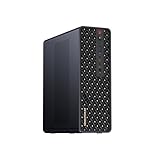
- 【High-Performance APU】The MS-S1 MAX features an AMD Ryzen AI Max+ 395 APU, integrating a Zen 5 architecture CPU (up to 5.1GHz, 16C/32T, 64M L3 Cache), an RDNA 3.5 GPU, and an NPU (50 TOPS). The total system output is 126 TOPS. It provides powerful parallel computing capabilities for demanding AI workflows. It is ideal for running local LLMs, multimodal models, and computationally intensive tasks
- 【LPDDR5x-8000MT/s Unified Memory】Equipped with 128GB of LPDDR5x-8000MT/s unified memory,4TB pcle SSD,it enables the CPU and GPU to access a shared, high-bandwidth memory pool with extremely low latency. This architecture eliminates traditional VRAM bottlenecks, ensuring smoother data transfer during high-intensity computations and maximizing performance stability under heavy loads. It is ideal for large-scale AI inference, 3D workloads, and complex timelines in video editing.
- 【Flexible Expansion】The MS-S1 MAX features USB4 V2 (up to 80Gbps), dual 10GbE LAN, HDMI 2.1 (up to 8K60), a full-length PCIe x16 expansion slot, and dual M.2 slots supporting up to 16TB RAID 0/1. Wi-Fi 7 provides stronger signal coverage and a more stable wireless experience. The slide-out design facilitates upgrades and maintenance. It easily adapts to personal, studio, or rack-mount enterprise environments
- 【High-Efficiency Cooling System】Utilizing an aerospace-grade aluminum alloy chassis, copper base plate, six heat pipes, dual turbine fans, and advanced PCM thermal conductive material, it maintains stable cooling performance even under continuous load. This system supports 130W continuous power and 160W peak power operation, with a built-in 320W power supply. It boasts multiple global certifications including CCC, FCC, UL, CE, and UKCA, ensuring stable and reliable operation in various environments
- 【Cluster Design】Two MS-S1 MAX units can be configured as a dual-unit cluster to run a large 235B Q4 model locally, achieving an output speed of 10.87 tok/s. Supporting 2U rack deployment, multiple MS-S1 MAX units can be cascaded into a distributed cluster to create a high-efficiency AI computing center. A cluster of four MS-S1 MAX units successfully ran a DeepSeek-R1 671B Q4 large model. A reserved cluster power-on interface allows for unified start-up and shutdown
US-hosted third-party inference
Current provider catalogs list US-hosted or self-hosted routes for DeepSeek, Qwen, Kimi, GLM and other Chinese models, with fields for context, tool calling and data policy. These commercial offerings change rapidly. Treat a catalog entry as a lead, then obtain a current service agreement and verify the exact model build, location, retention and subprocessors.
Which model fits which decision?
When documentation and a broad starting test matter
Start with DeepSeek or Qwen. DeepSeek has dated transparency listings, model cards and technical reports for V4.0 and V3.2. Qwen has an official open-source hub and a managed API path. Run the same workload suite against both rather than assuming a headline benchmark settles the choice.
When very long context or agent workflows matter
Test Kimi and GLM alongside DeepSeek and Qwen. GLM-5.2 is listed with a 1-million-token maximum input option, while GLM-5.1 is listed with 64,000. Confirm whether your chosen endpoint supports that limit, the price at that context size, tool calls, streaming and your required structured-output mode. Kimi’s hosted and private routes may be attractive for agent or long-context designs, but verify the Kimi K3 license and hardware requirements for the release you plan to run.
When local operation is non-negotiable
Prioritize releases with downloadable weights and clear licenses. Qwen’s open-source model hub and the described DeepSeek V4 MIT license are possible starting points, subject to checking each exact artifact. Kimi K3 is described as privately deployable but uses a custom license. “Can run locally” also means your hardware can serve the selected parameter size at an acceptable latency and concurrency; without a published hardware target for your exact checkpoint, measure it on your own infrastructure.
When compliance and auditability dominate
A private deployment gives the strongest control over the data path, but only if your organization operates logging, access control, patching, moderation and incident response competently. A managed API may be preferable when the provider can contractually meet your residency, retention and audit requirements and you lack the staff to operate a secure inference service.
A practical selection process
- Define the boundary. List prohibited content, regulated data, required regions, uptime, latency, context length, languages, tools and output formats.
- Shortlist routes. Include at least one managed endpoint and one private-capable option where data control is important.
- Verify primary documentation. Record the exact model ID, release date, license, context limit, safety policy and deprecation terms.
- Run capability tests. Use identical prompts, tools and scoring across candidates.
- Run adversarial safety tests. Include Chinese and English attacks, multi-turn manipulation, retrieval injection and tool-output injection.
- Calculate total cost. Add tokens, retries, concurrency, GPUs, storage, engineering, monitoring, moderation and compliance work.
- Conduct a limited pilot. Monitor real failure modes and latency before committing to a long-term contract or large GPU purchase.
Common mistakes to avoid
- Calling a model “safe” from a refusal demo. Attack prompts can expose failures that ordinary tests miss.
- Transferring hosted safeguards to downloaded weights. Private operators must recreate moderation and monitoring.
- Comparing scores from different versions. Record the model ID and date; a new release can change both capability and refusal behavior.
- Using a regional price as a global quote. Alibaba Cloud’s table separates regions and billing conditions.
- Assuming a context headline is usable capacity. Test latency, memory, retrieval quality and cost at the context size you need.
- Ignoring licenses. DeepSeek V4 and Kimi K3 are described with different licensing approaches, and terms can be release-specific.
- Skipping non-English evaluation. A model’s English score does not establish equivalent Chinese instruction following or safety behavior.
Decision summary
Use DeepSeek or Qwen as the first documented comparison pair, then add Kimi or GLM when long context, agent workflows or regional routing are central requirements. Select a managed API for fast delivery and provider operations; select private deployment for data-path control, auditability or offline use when you can operate the infrastructure safely. Treat benchmark scores as a screening signal, and make the final decision with a fixed, workload-specific capability and jailbreak evaluation plus a region-accurate total-cost model.

